Redesigning Workday’s Home Experience for People Managers
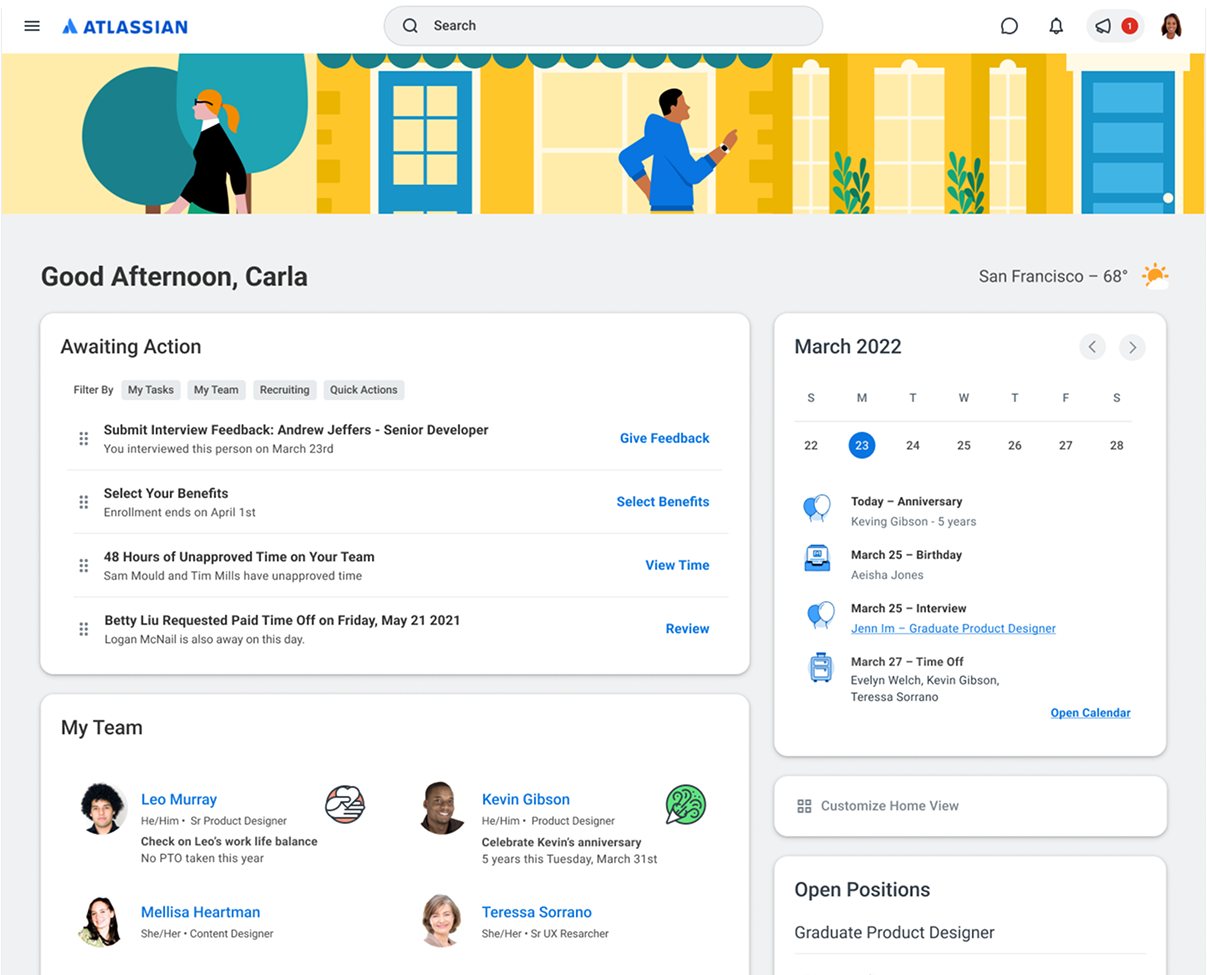
Spearheaded the research, strategy and MVP design for a dedicated manager home page, laying the groundwork for a global rollout across Workday.
- Role
- Lead Product Designer
- Timeline
- 1+ year
- Team
- Product Designer, Product Manager, Lead Developer
Some of the work shown here was exploration and may have since been updated in the product.
Overview
Context
Workday is an Enterprise Management Cloud for finance, HR, planning and spending management.
Impact
I spearheaded the research, strategy and MVP design for a dedicated manager home page, laying the groundwork for a global rollout across Workday.
The problem
Workday’s existing home page was built for individual contributors. People managers, who carry the responsibility of supporting salaried teams, landed on the exact same page. They had to sift through individual tasks instead of prioritizing team needs, growth and oversight.
The goal
How might we transform the home experience to empower managers to support their teams effectively?
Success metric
Shift the default experience from personal task-tracking to team enablement to drive active manager engagement.
Unifying fragmented research
Bridging silos
Workday UX lacked a comprehensive, shareable persona for managers, so different teams worked from partial views.
Synthesizing insights
I reached out to teams serving the same audience, consolidated all existing research into a single presentation, and shared it across the organization to establish a unified baseline understanding.
Defining the strategy
Partnering with the Product Manager, we framed the redesign around core manager jobs to be done:
- Seeing team highlights to prioritize immediate actions.
- Supporting team member growth and understanding team health.
- Tracking candidate progress through the hiring pipeline.
Iterative design and alignment
Content-first approach
I prioritized content hierarchy and manager needs before visual styling.
Exploring directions
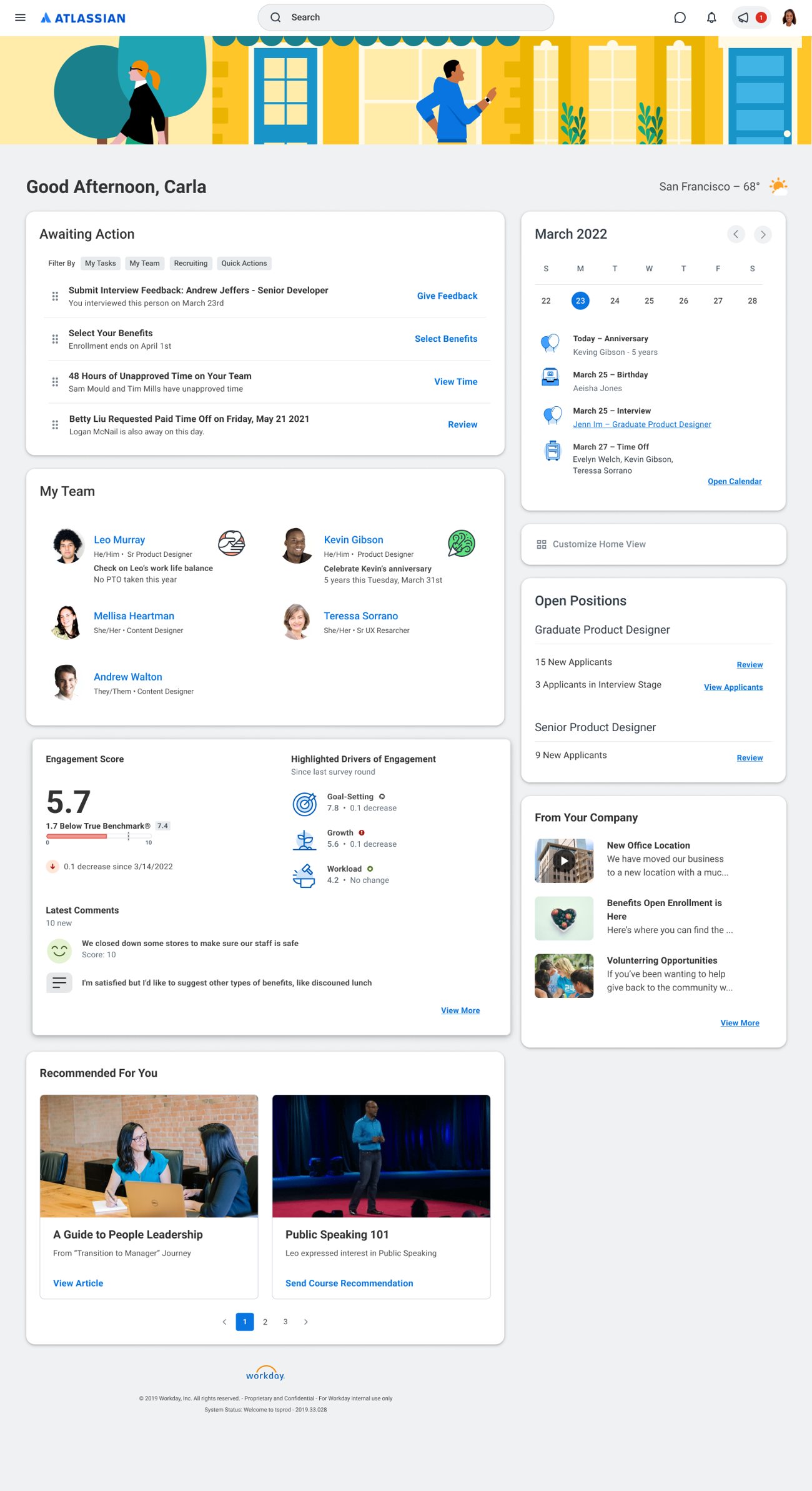
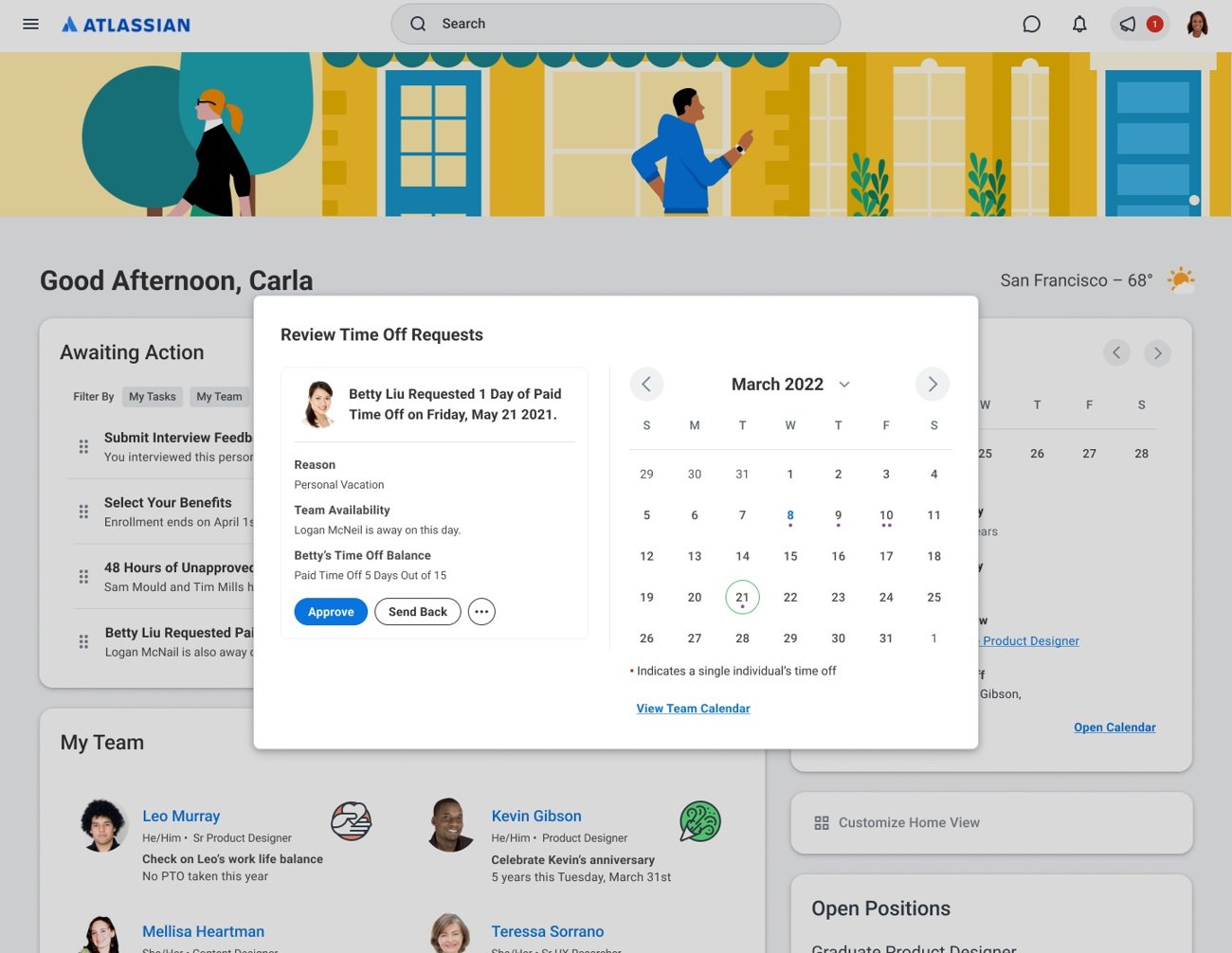
I developed multiple layout concepts, from full-page layouts with team engagement and recommended learning to contextual time off reviews alongside team availability.
Cross-functional validation
I partnered with peers for design critiques, and aligned early with engineering and product to evaluate technical feasibility and scope.
Transparent stakeholder management
I kept an open-door review process and informed stakeholders through regular share-outs, so the design evolved continuously with feedback.
Scoping and launching the MVP
To deliver immediate value, we focused our release on the highest-priority job to be done: seeing team highlights to prioritize actions.
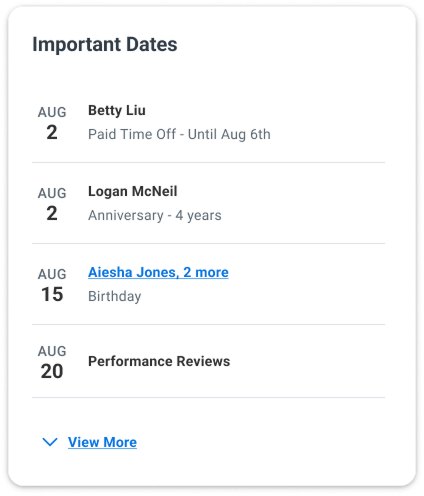
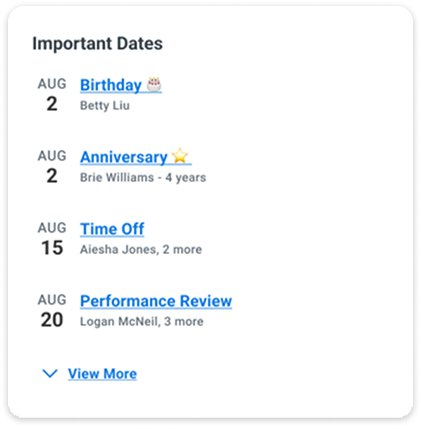
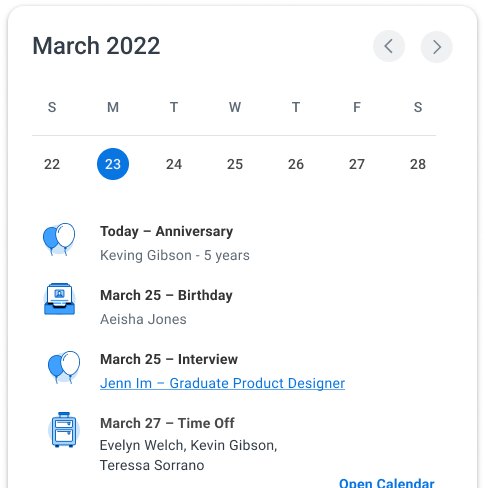
I designed and drove the initial feature release, focused on important upcoming dates and events visible at a glance.
I explored multiple intuitive layouts, including person-led, event-led and calendar-integrated views, to make team planning seamless.
Results and learnings
Foundational impact
I left the company after shipping the initial MVP and core features. The foundational architecture and strategy we established paved the way for the full home experience to roll out globally to every manager at Workday.
Key lesson: share research widely
Pulling scattered research into a single, centralized view accelerated alignment across teams, and made subsequent design conversations faster and more focused.